

Payroll is a Significant Risk for the Employer
One of the biggest risks for employers is mishandling payroll and employee taxes.
Not only is the employer always at risk for an IRS audit, but the state unemployment departments can get involved as well.
Since the CARES Act of 2020, both state and federal unemployment funds have been significantly burdened, and in many cases depleted. This money will have to be recouped somehow, and as usual, it is the employers who will bear the lion’s share of the burden.
What Does Payroll Have To Do With Taxes?
Most of employee taxes are assessed (and collected) by periodic payroll reporting, which is mandatory for the employer. While some small companies can report quarterly, as the amount of payroll grows, the period shortens to monthly, weekly and even 2X a week.
Employers are responsible for deducting and matching the correct amounts each payroll cycle. A failure to do so can result in a payroll audit by the IRS or state and local unemployment authorities. It is very important that the employer allocates and pays in a timely manner the taxes assessed.
It’s also important to note that audits are rarely “timely”, but will be imposed for a tax year in the past, as many as four years ago. This makes accurate record keeping an essential task.
What Taxes Are Taken Out of Payroll?
Below is a breakdown of a simple payroll assessment. For the sake of the exercise, presume the employee is being paid in Florida. Numbers are current as of May 1, 2021.
| Item | Employee Percentage | Employer Contribution |
| Income Tax | (varies by tax table) | |
| Social Security | 6.2% | 6.2% |
| Medicare | 1.45% | 1.45% |
| Workers’ Comp Insurance | varies by class code(*) | |
| Federal Unemployment (FUTA) | 0.6% | |
| State Unemployment | 2.7% (**) |
(*) Worker’s comp premium is assessed on payroll, based on the risk of the employee “class code.” Most third party payroll systems provide a “pay as you go” option for workers’ comp insurance. This reduces the impact of an annual audit, and “smooths out” the premium payment over the entire year. EmployerNomics highly recommends this practice.
(**) Currently 2.7% for first three years, varies between .3 and 5.4% after that based on experience. Currently applies only to the first $7,000 in annual wages earned by each employee.
This illustration does not include county and local taxes, if any. Also not included are employee deductions for benefits, health insurance, child support, etc.
The new employer in Florida, as seen in this example, is immediately responsible for nearly 11% excess of the payroll. So paying someone $1,000 actually costs the employer $1,109.50
So Where is the Risk?
There are three specific areas of risk covered in the paragraphs below:
1: Running Out of Money Before the Taxes are Due

This happens quite often to new business owners. They are so busy paying bills and investing in their business that they “forget” to safely store away the money they have collected (and matched) in employee taxes. In fact, there is a dubious industry forming right now to cover this problem, commonly referred to as “Payroll Funding.” These will “loan” the employer the money and collect the balance plus interest over time. EmployerNomics does not recommend the use of a particular payroll funding company at this time.
2: Using the Wrong Numbers
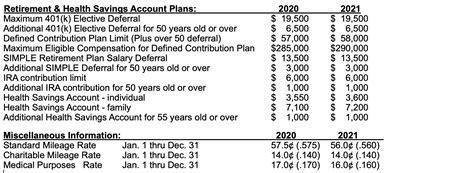
The tax landscape changes rapidly, at least once a year. The federal government is always adjusting the IRS tax code, which is some 200,000+ pages right now.
This article by tax consultant Joseph Hill explains the following:
- Payroll Tax Non-Payment Is Considered By The IRS As Number One Priority For Collection Actions
- When it comes to Payroll Taxes, personal assets are not always shielded
- The business assets as well as the owner’s personal assets are subject to the IRS Lien
- The IRS can seize and sell all business and personal assets of the business and owner to collect the total tax, penalties and interest owed.
To put it simply, it isn’t wise to try and fool the people who can put a padlock on your business and your house.
3: Incorrectly Classifying Employees (W-2) as Contractors (1099)

Ironically, it is rarely the iRS that gets involved with this audit. No, it is usually the state, who is concerned with loss of unemployment tax revenue, who will examine you for incorrectly classifying employees as contractors.
See this article by John Will Tenney for more information.
Summary:
- The states need to recuperate unemployment funds, due to rampant abuse (most recently perpetuated by the FFCRA and CARES Act.)
- Independent contractors frequently fail to file correctly
- The state can pretty much arbitrarily decide that any contractor is an employee (and there is legislation in progress to make this even worse
- This is a task best left to professionals
EmployerNomics strongly suggests using a Co-employment or leasing arrangement to make the employees and taxes “Somebody Else’s Problem”.
If you would like to start a conversation with us, please call us at 407-490-2468